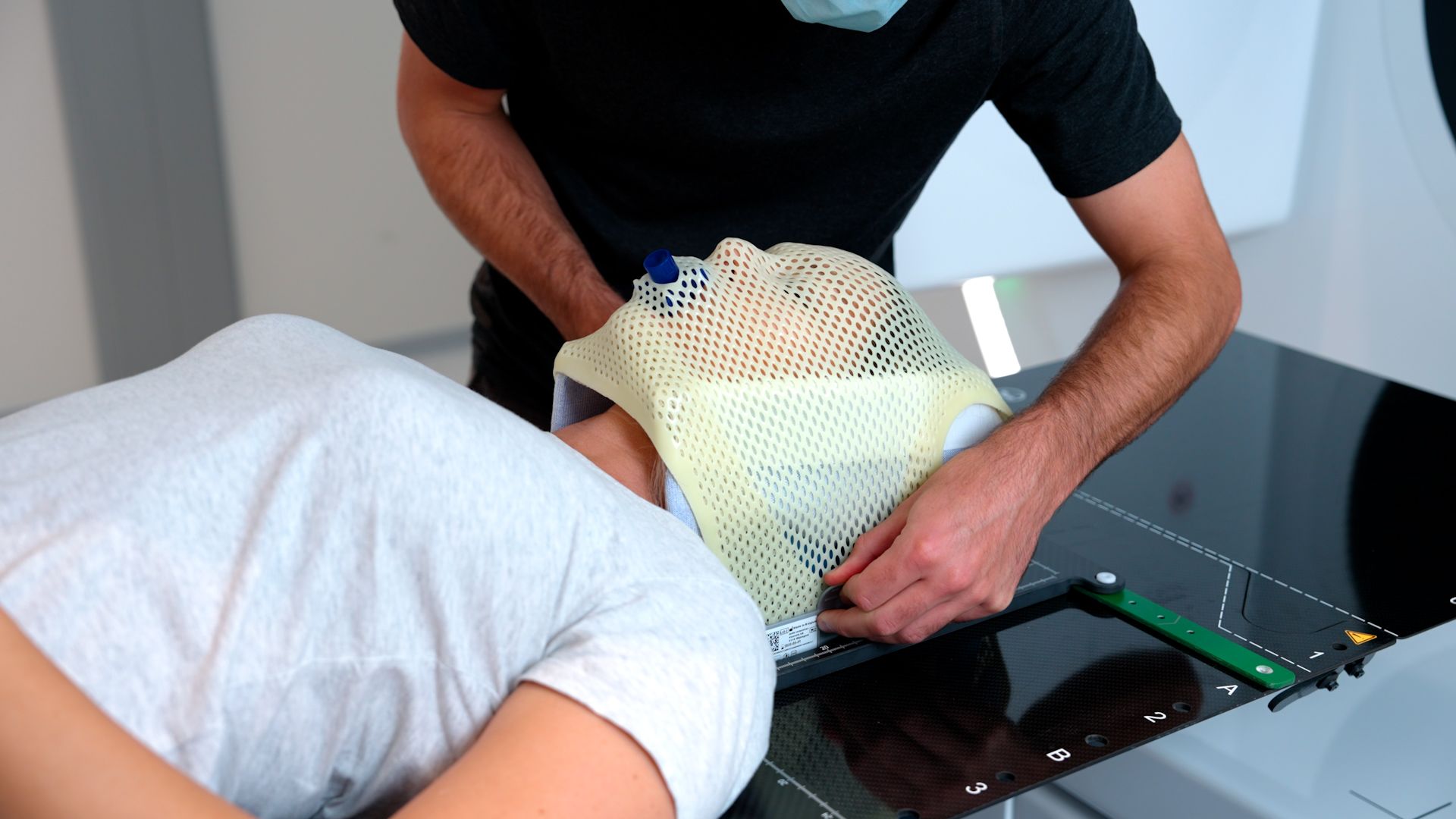
Intrafraction Motion Stability of Open vs. Closed Face Masks in Head and Neck Radiotherapy
In the realm of Head and Neck radiotherapy, patient immobilization is paramount to ensure treatment accuracy and minimize risks. Traditionally, full-face closed thermoplastic masks have been used to achieve effective immobilization during treatment. However, these masks can pose significant challenges for patients due to discomfort and anxiety. Open face masks have emerged as a patient-friendly alternative. They help reduce feelings of claustrophobia and treatment-related stress, offering improved comfort without compromising precision.
The OPEN (Optimising Patient Experience in Head and Neck Radiotherapy) Phase III trial, conducted at
St. Luke’s Hospital, Dublin, Ireland, has provided compelling clinical evidence supporting the efficacy of Orfit's open face hybrid masks in achieving intrafraction motion stability comparable to traditional closed facemasks.
The OPEN Phase III trial study compared intrafraction motion across different face mask designs:
Both CBCT and SGRT were used to assess patient motion during treatment.
Importantly, the study found that both Orfit's 3-point and 5-point open face hybrid masks provided intrafraction stability comparable to traditional closed face masks. This demonstrates that patients can benefit from significantly improved comfort—especially those with anxiety or claustrophobia—without any sacrifice in treatment accuracy or precision. Orfit's open face hybrid masks make the radiotherapy experience more patient-friendly while maintaining the highest standards of clinical effectiveness.